

CoinEx in 2026: What Cryptocurrency Reserve Reports Reveal About Exchange Reliability
Cryptocurrency exchanges often publish reserve figures to demonstrate that they hold enough digital assets to cover customer balances. CoinEx has followed this practice since 2022, releasing Proof of Reserves reports that compare cryptocurrency holdings with reported customer liabilities. Throughout 2026, its published figures showed reserve ratios above 100% for several major assets. However, the exchange’s announcement on 15 September 2026 that it would cease operations introduced an important distinction between asset backing and business sustainability. By October 2026, CoinEx had already discontinued trading services, although withdrawals remained available until 22 December. Examining its reserve reports alongside this closure provides a useful example of what financial transparency can establish, what it cannot prove, and why exchange reliability requires more than reassuring percentages.
What CoinEx Reserve Reports Show in 2026
CoinEx introduced its Merkle Tree-based Proof of Reserves system in 2022, allowing customers to check whether their balances were included in published reserve calculations. Rather than simply declaring that sufficient funds existed, the exchange disclosed the quantities of selected cryptocurrencies held in identified wallets and compared them with corresponding customer balances recorded internally. The resulting reserve ratio indicated whether the reported holdings were equal to, greater than or lower than customer liabilities for each supported cryptocurrency. A ratio of 100% represented full reported coverage, while a figure above that threshold indicated additional assets relative to customer balances at the reporting date.
The January 2026 report provided an early reference point. Published on 22 January, it showed reserve ratios of 106.23% for Bitcoin, 100.31% for Ethereum, 112.24% for Tether (USDT), 109.94% for USD Coin (USDC), 111.84% for CoinEx Token (CET) and 100.20% for Dogecoin. CoinEx reported cryptocurrency holdings with a combined market value of approximately $567.42 million. These figures suggested that the disclosed holdings exceeded the corresponding customer balances for all six assets. Nevertheless, the report did not establish the exchange’s overall profitability, the amount of available operating capital or the full extent of its financial obligations beyond the liabilities represented in the reserve calculation.
Subsequent reports demonstrated why reviewing several reporting periods matters more than relying on a single impressive figure. On 9 April 2026, CoinEx disclosed 2,244.66 BTC in on-chain assets against 2,124.49 BTC recorded internally, producing a reserve ratio of 105.65%. Ethereum showed a considerably smaller margin, with 15,148.20 ETH against 15,111.83 ETH and a ratio of 100.24%. By 8 May, reported Bitcoin holdings had decreased to 2,168.80 BTC, while the reserve ratio increased to 106.10%. This illustrates that a higher percentage does not necessarily mean an exchange owns more cryptocurrency. The relationship between available assets and customer balances determines the ratio, and both quantities can change between reporting dates.
How Reserve Ratios Changed Before the CoinEx Closure
CoinEx continued publishing reserve information during the first half of 2026. Its June update reported ratios of 105.33% for BTC, 100.23% for ETH, 106.53% for USDT, 102.72% for USDC, 102.76% for CET and 100.83% for DOGE. The reported market value of wallet holdings was approximately $528.10 million. Compared with January, these figures showed changing asset balances and varying margins above full coverage. Ethereum remained particularly close to 100%, although it did not fall below that threshold in the cited reports. A narrow margin is not automatically evidence of a problem, but it leaves relatively little additional coverage within that particular reported asset category.
The final reserve snapshot identified in October 2026 coverage was dated 14 September, shortly before CoinEx announced its closure. The reported reserve ratios were approximately 105.60% for BTC, 100.58% for ETH, 109.13% for USDT, 101.53% for USDC, 107.42% for CET and 100.92% for DOGE. The combined value of assets reported in exchange wallets was approximately $430 million. These September figures were reproduced by independent cryptocurrency reporting sources using the exchange’s reserve information. They should be understood as CoinEx’s published snapshot rather than a complete independent examination of its finances. They also represented only six cryptocurrencies, not necessarily every asset or obligation associated with the business.
Comparing January and September reveals two important developments. First, the reported market value of wallet holdings declined from approximately $567 million to around $430 million, although this difference cannot be interpreted directly as customer withdrawals or financial losses because cryptocurrency prices and asset quantities both affect dollar valuations. Second, the disclosed ratios remained above 100% even as CoinEx approached its decision to stop operating. This is the central lesson from its 2026 reporting history: sufficient reported cryptocurrency backing does not guarantee that an exchange can maintain a commercially viable business. Reserve figures describe a particular aspect of financial coverage, whereas continued operation also depends on revenue, liquidity, expenses, regulatory obligations and management decisions.
How Reliable Is CoinEx Proof of Reserves?
Proof of Reserves provides more information than an unsupported statement that customer funds are protected. At CoinEx, the process combined cryptocurrency wallet information with a Merkle Tree, a method of organising account records so that individual users could verify the inclusion of their balances without viewing everyone else’s account details. This creates a practical way to examine part of the exchange’s accounting claims. Users can compare published reserve ratios, inspect the applicable reporting date and follow the instructions provided for checking their own balance records. Nevertheless, the usefulness of this information depends on the accuracy and completeness of the underlying data.
One limitation concerns the distinction between assets and liabilities. Blockchain records can provide evidence that cryptocurrency exists at particular addresses, but proving that an exchange controls those addresses requires additional verification. Even when wallet ownership is established, visible assets do not automatically reveal every financial obligation attached to them. An exchange could have outstanding loans, operational debts, contractual commitments or other liabilities that are not represented by the customer-balance figures used in a particular Proof of Reserves calculation. Consequently, a ratio above 100% should not be treated as confirmation that the entire business is solvent under all circumstances.
Another limitation is timing. Reserve reports describe conditions at a particular moment, whereas deposits, withdrawals and asset transfers continue between snapshots. CoinEx traditionally published updates approximately monthly, giving users a series of dated observations rather than continuous confirmation of its financial position. A report showing 105% Bitcoin coverage on one date does not establish the same ratio several weeks later. Similarly, cryptocurrency held in wallets may differ from immediately accessible funds if assets are committed to staking arrangements or otherwise subject to operational restrictions. Understanding these differences is particularly important when an exchange faces unusually heavy withdrawal demand or is preparing to cease services.
Why Independent Audits and Financial Transparency Matter
A Proof of Reserves report and an independent financial audit answer different questions. Reserve verification generally focuses on whether selected cryptocurrency assets cover the customer balances included in the calculation. A broader financial audit examines accounting records, obligations, internal controls and other aspects of a company’s financial position according to its defined scope. CoinEx’s published reserve figures were primarily exchange-provided disclosures, and the September snapshot should not be described as independently audited without evidence of an external auditor’s examination. This distinction matters because publishing verifiable blockchain data is useful, but it does not replace an independent assessment of the business’s complete financial circumstances.
The range of assets included in a report also affects its usefulness. CoinEx regularly disclosed information for BTC, ETH, USDT, USDC, DOGE and CET. These figures gave customers insight into several important holdings, yet they did not provide an equivalent public reserve calculation for every cryptocurrency available through the exchange. The inclusion of CET deserves particular attention because it was issued within the CoinEx ecosystem and had different market characteristics from Bitcoin or widely used stablecoins. Its market value and liquidity could change substantially under commercial pressure. Comparing the coverage of individual cryptocurrencies is therefore more informative than treating every percentage above 100% as evidence of identical financial strength.
For users evaluating exchange disclosures, the most useful approach is to examine the reporting method, the publication date, the assets covered and the evidence supporting the numbers. It is also worth checking whether wallet addresses can be verified, whether customer liabilities are clearly defined and whether an independent specialist has examined the methodology. Historical security incidents, withdrawal performance, customer support and the exchange’s legal status provide additional context. CoinEx experienced a significant security breach in September 2023, when attackers accessed cryptocurrency held in hot wallets. Although the company subsequently addressed the incident and continued publishing reserve figures, the event demonstrates why asset coverage and operational security must be assessed separately rather than treated as interchangeable measures of reliability.
CoinEx Closure in 2026: What Reserve Reports Cannot Guarantee
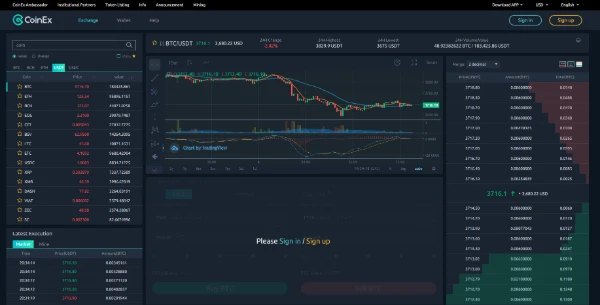
On 15 September 2026, CoinEx announced that it would wind down its exchange operations after nearly nine years. The company cited prolonged weakness in cryptocurrency markets, declining trading volumes and liquidity, increasing regulatory requirements and growing compliance costs. These circumstances had made continued operation commercially difficult, according to its announcement. The decision was particularly significant because the exchange continued to report reserve ratios exceeding 100%. Its closure therefore illustrates a limitation that can easily be overlooked: having reported assets available to cover customer balances is different from generating enough income and maintaining the necessary business conditions to operate indefinitely.
CoinEx introduced a staged closure timetable. New registrations stopped on 15 September, while futures entered reduce-only mode and several other services stopped accepting new orders. Non-spot services, including futures, margin-related products, lending and earning arrangements, were scheduled to cease on 22 September. Spot trading ended on 29 September, together with operations associated with CoinEx Smart Chain and OneSwap. The company also introduced arrangements for settling remaining cryptocurrency holdings and repurchasing CET at 0.005 USDT per token. By 29 October 2026, CoinEx was no longer operating as a conventional cryptocurrency trading exchange. Its remaining exchange-related activity centred on processing balances and withdrawals.
The withdrawal deadline is 22 December 2026 at 10:00 UTC+8, equivalent to 02:00 UTC. CoinEx stated that customer assets were fully backed and that withdrawals would remain available until this deadline. However, the closure arrangements contain important conditions. Non-USDT assets remaining after the September trading shutdown were subject to settlement procedures, meaning users should not assume that every original cryptocurrency remains available for withdrawal in its previous form. Any USDT left after the final withdrawal deadline is scheduled to enter independent custody, with a monthly custody fee equal to 5% of the original balance recorded when the withdrawal period ends. The company has specified 22 August 2028 as the final date for submitting custody claims. These conditions make the exchange’s operational announcements more immediately relevant than its historical reserve percentages.
What CoinEx Users Should Check Before December 2026
Anyone who still has assets associated with a CoinEx exchange account should begin by reviewing the current account balance and transaction history. The most important question is not simply whether the September reserve report exceeded 100%, but which assets remain available for withdrawal and how earlier holdings were processed during the September settlement period. Users who previously held CET, alternative cryptocurrencies, staking balances or other investment products should check whether those holdings were converted or settled. Transaction records can help establish the quantities involved and identify any remaining funds. CoinEx Wallet and CoinEx Vault are separate services that the company stated would remain operational, so customers should also distinguish exchange-held assets from funds controlled through those products.
Before transferring cryptocurrency, users should verify the destination address, the supported blockchain network and any applicable withdrawal charges. Sending USDT through an incompatible network can cause a permanent loss of funds, even when the recipient address appears valid. Where practical, a small test transaction can help confirm that the receiving wallet or exchange accepts the selected asset and network. Customers should also retain withdrawal confirmations and blockchain transaction identifiers. Because cryptocurrency transfers can experience network congestion or additional verification requirements, leaving a withdrawal until the final day creates unnecessary risk. Requests involving account recovery or identity checks should be handled through verified CoinEx contact channels rather than links supplied by unknown third parties.
CoinEx’s experience offers a clear answer to the question of whether cryptocurrency reserve reports are sufficient to assess exchange reliability. They are valuable when they provide dated, verifiable evidence that reported holdings cover specified customer balances. They become more informative when examined across multiple periods and supported by independent verification. However, they cannot establish overall business profitability, complete financial solvency, future market liquidity or the ability to continue providing services. In October 2026, the practical priority for remaining CoinEx customers is completing withdrawals before 22 December, not interpreting historical reserve ratios as a guarantee of future access. More broadly, the case demonstrates that financial transparency is one part of exchange risk assessment, but it cannot substitute for examining operational conditions, legal obligations, security practices and the availability of customer funds.